A Voice in Every Room
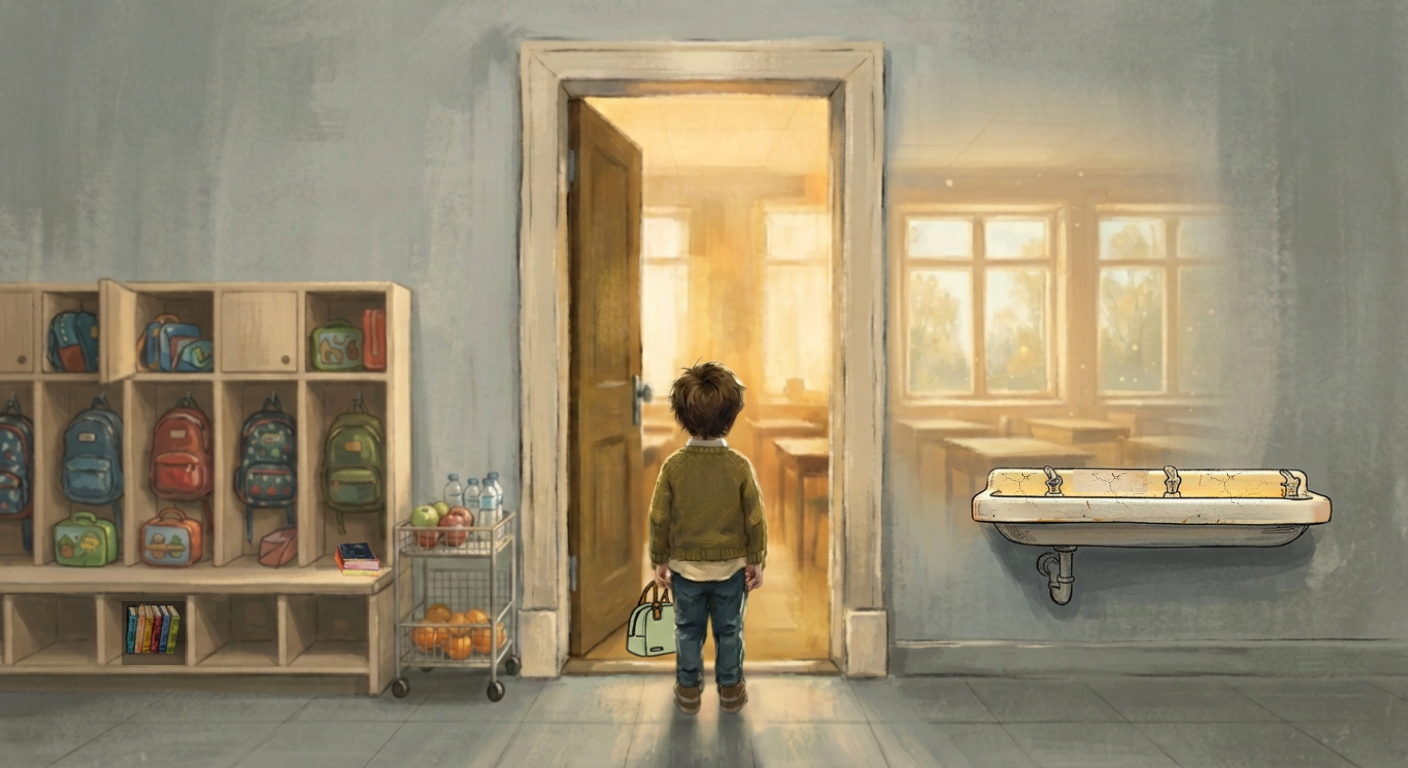
On Sunday morning, I had the hiccups.
Hunter turned to me, put his hand on my knee, and started to breathe. In through his nose for four. Out through his mouth for four. He did not say a word, because he does not use them. He just showed me.
So I copied him. In for four. Out for four. And the hiccups stopped.
He let me sit in it for a minute. Then he turned back, met my eyes, and breathed again, slower this time, with a question in his face. He was asking me if it had worked.
It had worked.
I am forty-five years old and my non-verbal son just taught me how to settle my own body.
No words. One small hand on my knee and a heart that wanted to help me. People keep asking how my boy got so smart. He did not get smart this morning. He has been smart the whole time. The only thing that changed is that I got to watch him use it on me.
And then I send him to school.
Six Hours, Every Day
Six hours. Every day. I hand him over at the gate to people I know by a first name and a blue card, and I am told to trust them. I do trust them, because there is no other option. You cannot keep a child home for their whole life.
But here is what I cannot stop thinking about”
Who watches his food? Who watches his drink? Who takes him to the toilet and is gentle about it? Who notices if he is sick, if he is sore, if he needs the sick bay? Does he even know there is a sick bay? Who reads his face when he is frightened? Who listens to a boy with no words if someone is unkind to him? Who listens if someone hurts him? Who listens if someone touches him in a way he cannot consent to and cannot describe?
I send him in, and I hope. That is the whole of my power. Hope.
I send him in, and I hope. That is the whole of my power. Hope.
This morning Hunter woke with a sore shoulder.
He had a relief teacher and a different aide yesterday, and I will be careful here, because I am not accusing anyone of anything. But he told me about it. He always tells me. He just does not use words to do it.
He put on a whole production. Butt naked - in the middle of getting dressed. He held his shoulder. He counted out three teachers. Then he acted out a battle, one figure swinging a flying punch like Iron Man, the other sent flying across the room, the sound effects standing in for the words other children would use. Somewhere inside that pantomime is a sore shoulder, a grab, a day I was not there for. I cannot tell you which parts are real, which parts are a five-year-old’s imagination, and which parts are both at once.
This is the translation I do every day. A parent of a chatty child learns early that noteverything gets reported straight, that there is the truth, the bigger truth, and the truth with a dragon added. Now take away every word. Leave only sounds, gestures, a body that aches and cannot say why. Then ask me to work out, on my own, whether the bruise on his arm comes from his disability, his health, a hard day being five, or someone’s hands.
No Ledger, No Trail
Handing my son over for the day feels like handing my bank account to a stranger and asking them to mind my investments for six hours. Keep them safe. Grow them if you can. The difference is that a bank leaves a trail. Every dollar in, every dollar out, a record I can pull if something does not add up. With a non-verbal child you get none of that. No statement. No ledger. No way back to the truth if the truth goes missing. You get a tired boy at three o’clock and a feeling in your gut, and you spend the night trying to work out whether the feeling means anything.
Right Here, in Victoria
And right here, in Victoria, there is a case in the news right now.
A mother whose son is non-verbal and autistic. He kept coming home with bruises, finger-shaped ones, on his arm. She raised it with the school and gave them the benefit of the doubt, because that is what you do, because you cannot let yourself believe the worst about the people who hold your child. When the marks kept appearing, she did the only thing left to a mother whose son cannot tell her what happened. She sent him to school with a listening device.
She is now facing criminal charges. Not whoever left the marks. Her. Because in this state it is a crime to record a conversation you are not part of, and a non-verbal child cannot hand you the words to make it lawful. The law built to protect privacy is being turned on a mother who had no other way to hear her own son.
Sit with that. A woman is being walked through a courtroom for the crime of trying to find out how her little boy got hurt.
A Pattern, Not Bad Luck
This is not new, and it is not only here. Right now, there is a mother in Louisville who hid a tiny camera in her son’s hair for the very same reason, half a world away. Disabled children have always been the easiest to hurt and the hardest to believe, in every country, in every decade. That is not bad luck. It is a pattern, and patterns only break when enough people refuse to look away from them.
Every child should be protected. Included. Nurtured. Every single one, no matter where they come from, what they look like, or how they make themselves understood. That is not a grand ask. It is the floor. And the work of defending it does not belong only to the parents who are already worn down by the fight. It belongs to every adult who is standing in the room when a child cannot speak for themselves.
More Than a Blue Card
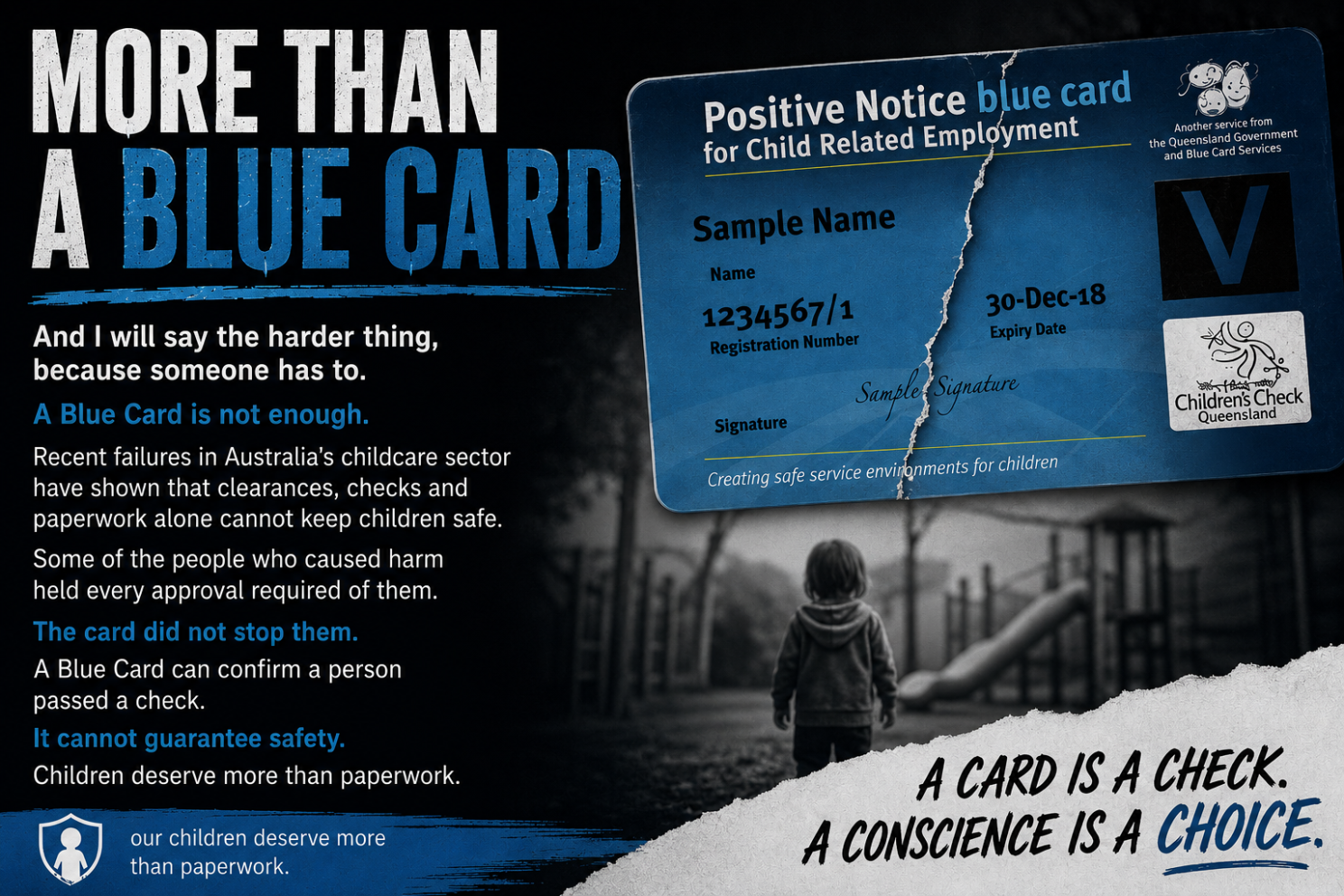
And I will say the harder thing, because someone has to. A blue card is not enough. We hand these cards over like they prove something, as if a clearance were the same as a conscience. Look at what has crawled out of the childcare sector in this country these last few years. People who held every check, every clearance, every piece of paper, and used the access those papers bought them to do the unthinkable to children far too young to tell. The card did not stop them. The card never stops the ones who actually need stopping. It only ever reassured the rest of us.
He Has So Much to Say
He is not less than. He is the boy who felt my body struggling and knew how to help me. He is the boy who checked, afterwards, to see if I was alright.
He has so much to say. He says it with his hands, his eyes, his whole body, with a stillness you have to slow right down to hear. My job, for as long as I have breath, is to make the world slow down and hear him. And when I cannot be in the room, my job is to make sure the room remembers he was always worth listening to.
This week he taught me how to breathe through things that shake me.
I am asking for so much less than that in return. I am asking the people who hold him for six hours a day to do one thing. Notice him. Believe him. Leave a trail for me to be able to help him tell me about his day.
That is not too much to want for a child.
It is the least.
The Question I’m Left Holding
So here is the question I am left holding, and I want to hand it to you.
What did you learn about your child’s week, while they were out of your care, in rooms you could never see into?
If they can tell you, in words, do not take it lightly. Some of us are reading sound effects and bruises, and praying we have read them right.
